About Micropolis
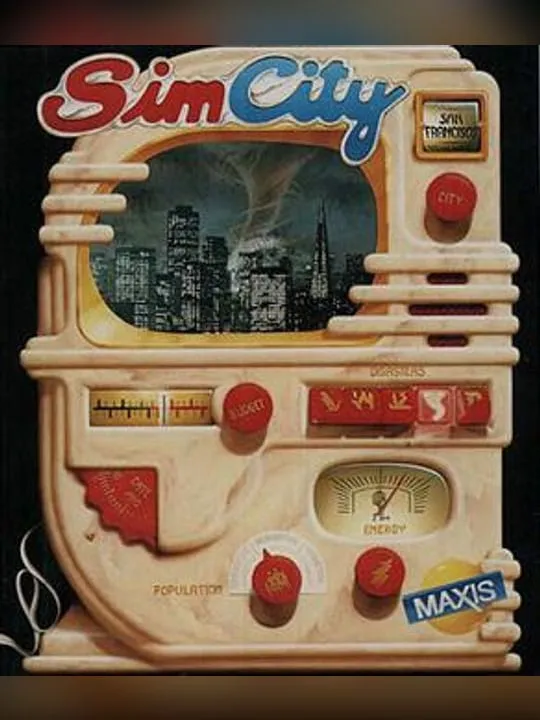
Micropolis is the first SimCity under another name. Will Wright designed SimCity at Maxis, and it came out in 1989, followed by versions for many other platforms up to 1991. It shows a city from overhead in two-dimensional graphics. Your job is to create a city, develop residential and industrial areas, build infrastructure and collect taxes to pay for more growth. The game puts weight on raising residents’ standard of living, keeping the different sectors in balance and watching the environment, so that the city doesn’t decline or go bankrupt.
So why isn’t it called SimCity? In 2008 the original SimCity code was released as open source under the GNU GPL v3, made for the One Laptop per Child project, whose XO-1 laptop is among the game’s many platforms. Electronic Arts owns the SimCity name, so the free release is called Micropolis instead. micropolisJS is allowed to use that name under the Micropolis Public Name License.
How it runs in your browser
micropolisJS is a port of Micropolis to JavaScript that Graeme McCutcheon wrote by hand. There’s no emulator involved: the simulation itself runs as an ordinary HTML5 web page, and its source code is published on GitHub. Pressing Play opens the micropolisJS page in a new tab, with nothing to install and no account.
A new game starts with a generated map. If you don’t like the terrain, press “Generate another” for a fresh one, then name your city and choose Easy, Medium or Hard. Every city starts in January 1900 with $20,000 to spend. Separate panels cover the Budget, the city Evaluation, Disasters, Save, Settings, Take Picture and Pause.
Controls and devices
You build with the mouse from a tool palette. Residential, Commercial and Industrial zones cost $100 each. Roads cost $10, rail $20, wire $5 and parks $10. Police and fire stations are $500 each, a coal power plant is $3,000 and a nuclear one $5,000. A port costs $3,000, a stadium $5,000 and an airport $10,000. The bulldozer costs $1, and there’s a Query tool as well.
It doesn’t work on phones. On small screens micropolisJS shows a “screen is too small” message, so use a desktop or laptop. Chromebooks haven’t been confirmed.
Tips
- Plan your first blocks before you build. A $3,000 coal plant plus police and fire stations at $500 each takes a large share of your $20,000 straight away.
- Open the Budget and Evaluation panels regularly as the city grows, since balance between sectors is what keeps it from declining.
- Roads cost half as much as rail, which helps while money is tight.
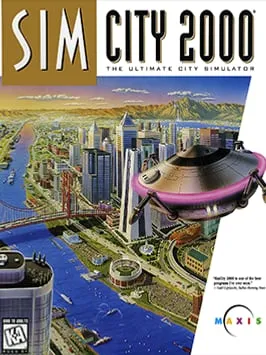
When you want the sequel, SimCity 2000 runs on DOS.Zone, and OpenTTD is another open-source simulation you can play in a browser.
Is Micropolis (SimCity Classic) Free, Safe and Official?
Is Micropolis the same game as the original SimCity?
It’s the original SimCity code, released as open source under the GPL v3 in 2008 for the One Laptop per Child project. Electronic Arts owns the SimCity name, so the free release is called Micropolis.
Can I play the original SimCity online for free?
Yes. micropolisJS runs Micropolis in a browser tab for free, with no download and no account. It’s a single-player game.
Does Micropolis work on a phone?
No. micropolisJS shows a “screen is too small” message on small screens, so you’ll need a desktop or laptop.